Showing posts with label inspiration. Show all posts

Monday, 12 October 2020

Inspiration: You Make It Feel Like Christmas

I first had the idea for You Make It Feel Like Christmas way back in 2014 while I was at the cinema watching Guardians of the Galaxy. You can't see the connection between a superhero movie and a Christmas romantic comedy? Well, the soundtrack featured an old 70s song called Hooked on a Feeling and the lyrics got me thinking about people who have (for one reason or another) become stuck on a certain way of thinking.

I often have ideas for stories that I scribble down in a notebook and then promptly forget about but this one stayed in my mind. A few years later, when the mystery novel I was working on wasn't coming together in the way I wanted (I'll be blogging about that later), I decided to start something completely different. I remembered those characters who'd become 'hooked on a feeling' and You Make It Feel Like Christmas began to take shape.

Beth is obsessed with the idea of having a perfect family Christmas and still has feelings for the man that broke her heart seven years ago. Aidan associates Christmas spent at his family home with a tragic period in his life and would happily see the house flattened, whereas his brother Nick remembers his idyllic childhood and will do anything to save it.

I didn't realise until I'd finished writing the book that my feelings about the house I'd grown up in had also found their way into the story. This might have been because part of the book was written there while I was visiting my mother. We talked a lot about the 'old days' and the amount of work it had taken to restore the house.

My childhood home

My parents bought their house back in the 1970s. It was their dream house and restoring it became their hobby - except they didn't restore it in a traditional way! Instead, they trawled reclamation sites buying quirky fittings from old houses that had been demolished. Although the house was Victorian they added oak beams to the sitting room ceiling (original 300-year-old ship's timbers!) along with a huge Tudor fireplace.

I asked my mother why they'd chosen to do this and she explained that they had loved visiting old houses, with all their history, and wanted to recreate a little bit of that in their own home.

The appearance of the Abbey in my story was influenced by much bigger real-life houses, including Lyndhurst Mansion in Tarrytown, New York (also the location for the 1970s horror film House of Dark Shadows) and Newstead Abbey in Nottinghamshire (once home to Lord Byron - who also gets a mention!).

Newstead Abbey

When I wrote the book, I'd recently moved into one of the first houses on a new estate and for the next year I effectively lived on a building site. This probably influenced my decision to make Aidan a builder!

Like Agatha in You Make It Feel Like Christmas, my grandmother was heavily into crafting. I remember her making me jewellery out of rose hips, and jack-'o-lanterns out of turnips - they were super-scary! - and Christmas decorations out of real holly, ivy and fir cones, which she'd sprinkle with glitter or spray gold (this was the 80s!). My grandmother also told me the stories behind the traditions of decorating our houses with greenery, and the legend of Balder and Loki.

In You Make It Feel Like Christmas the Holly family have an heirloom box of decorations going back to the 1960s - so did my mother. Earlier in the story, when Nick decorates his tree with some very unusual baubles, he explains to Beth how much they mean to him. This is something that is also important to me. I've collected the decorations for my own tree over many years and every one has a story behind it.

Lucy's experience of driving through a snowstorm happened to me! Hearing the sound of compacted ice scrape the underside of my car is not one I'd care to repeat! 

Ophelia's fabulous high fruit, low sugar mince pies are based on my own recipe.

And the Holly family's usual Christmas - dinner at lunchtime, an afternoon spent watching the Christmas movie on TV, eating leftovers and Quality Street, and playing Death-by-Scrabble?

I wonder where I got that idea from?

Related Posts:

Friday, 20 March 2020

How I Found the 'Write' Inspiration

Have you ever read a book that you loved so much, that as soon as you finished it you had to go right back to the start and read it all over again? Have you ever read a book so many times that it eventually fell to bits? And when you went to buy a replacement, although the book had been reprinted several times, you had to have the version with the exact same cover as the one that had disintegrated? Reading a book just like that led to me becoming a writer.

I was 13 years old and on a family holiday to the Isle of Wight. It was the height of summer, so it rained and it rained and it rained. While my brothers disappeared off to the amusement arcade, I found myself in a little café/bookshop on my own, sat next to a carousel stacked with books by an author I’d never heard of: Jilly Cooper.

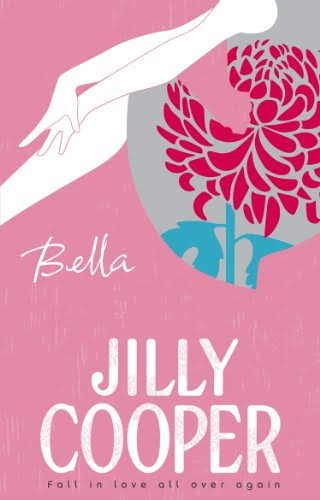
I know what you’re thinking: Jilly Cooper writes huge, glitzy, blockbusting novels about horses. But before Riders and Rivals, Jilly wrote a series of romantic comedies with girl’s names as the titles: Emily, Bella, Harriet, Prudence, Octavia and Imogen.

I handed over my pocket money in exchange for Emily and was soon transported to Scotland along with the heroine, who finds herself married to a brooding artist, spends the night in a haunted castle and is caught stealing roses in a see-through nightdress. I quickly handed over the remainder of my pocket money for the other five books and my parents didn’t see me for the rest of the holiday.

I think the reason I loved Jilly’s books so much was that they were hugely funny and didn’t take themselves too seriously. The heroines made the same mistakes as the rest of us, but rather than whinge about it they just cracked a joke and moved on. My favourite (the one that fell to bits) was Imogen. The heroine falls in love with a bad boy tennis player and is whisked off on holiday to the French Riviera, which at the time seemed a very long way from a rain-lashed Isle of Wight.

Three years later, for my English Literature exam, I had to give a presentation on my favourite books. My friends (being complete suck-ups) picked authors like Dickens and Orwell. I chose Bella, Octavia and Imogen. Unfortunately, my passion and enthusiasm for all things Cooper failed to impress the examining board and I passed with only a B+.

I didn’t mind. If you’re the kind of person who loves reading, sooner or later you’ll want to create stories of your own.

And that is exactly what I did.


This post was previously published on the Chick Lit Club blog

Links:

If you'd like to find out more about Jilly Cooper, click here for her website.

Related Posts:

Friday, 24 June 2016

New Book: Trust Me I Lie

In which I talk about the inspiration behind my latest novel.


Writing a book is like baking a cake. There is not just the one idea (ingredient) but several, all coming together to create the story. I had the original idea many years ago, while chatting to the crime writer Jessie Keane about the plot of her book The Make, in which the main character's brother ends up in a coma. And for some reason (I have no idea why - that's just how my brain works!) I thought of the classic fairy tale, Sleeping Beauty.

I've always loved fairy stories, particularly those with a darker edge, although I still prefer them to have a traditional happy ending! I blame my grandparents, who bought me two huge books of fairy stories when I was about six years old. Although I still own them, they are in a crate in storage so I can't show you a photo but oh, I did love them! I also owned the Ladybird versions, particularly Cinderella, which I loved because she got to go to the ball three times, in a succession of spectacular dresses. Yes, I know, I'm shallow: what can I say?

So, Sleeping Beauty + ballgown obsession = girl being found dead 'as though sleeping' in vintage Dior. This, for writers, is also known as the light-bulb moment!

The next ingredient (the location) popped into my head during one of my walks through the Welsh countryside near my home, where I stumbled upon a ruined mansion called Baron Hill, which looked as though it had come straight out of Sleeping Beauty. Although built in 1618 by Sir Richard Bulkeley, it was rebuilt in the late 1700s in a Neo-Palladian style. It was damaged by fire around the time of WW2 and has been left to become derelict. It is a very sad-looking place and, although there has been talk of restoring it, I feel it is far too gone to save it.


Although I've 'borrowed' part of the history of Baron Hill - built in the 1600s, and destroyed by fire - Baron Hill has been abandoned for far longer than the house in my novel.

When I started writing Trust Me I Lie I decided I was going to call it Something Wicked, but the more I wrote, the more I realised the title didn't fit. I'd also had the idea for a historical backstory, similar to my novel Breathless, but I soon realised that didn't work either. So I split the story into two books: the first one became my novella Something Wicked, the second became Trust Me I Lie. If you're a writer, I don't recommend doing this - I recommend properly planning your novel in the first place! (See my post, How I Write). But I've learned from this, and hopefully won't make the same mistake again. (Knowing me, I'll just make a whole load of new ones ... ) 

And the last ingredient? I moved to a village just outside Llandudno, where I came across these curious statues dotted around the town. Known as the Alice in Wonderland Trail, they reference the fact that Lewis Carroll's inspiration for Alice (Alice Liddell) once lived in the town. (And I've blogged about that here).


Any other completely random facts? Well, the scene where my heroine, Milla, finds two strange men trashing her sitting room is based on a nightmare I once had! And anyone who's read Nemesis might recognise Milla's apartment - it's the same one Alicia lived in before her marriage. And finally, if you want to see more photos of Baron Hill and the things which inspired me, be sure to check out my Pinterest board!

I hope you enjoy the book!

Trust Me I Lie

When Milla Graham arrives in the picture-perfect village of Buckley she tells everyone she’s investigating the murder of her mother, who died eighteen years ago. But there’s already one Milla Graham buried in the churchyard and another about to be found dead in the derelict family mansion.

Obviously she’s lying.

Detective Inspector Ben Taylor has no life outside the police force. Even his own colleagues think he’s a boring stick-in-the-mud. But now he’s met Milla and his safe, comfortable life has been turned upside down. She’s crashed his car, emptied his wallet and is about to get him fired.

He knows she’s a liar because she cheerfully told him so.

Unless she’s lying about that too …


Related Posts:

Ten Authors Who Influenced Me (or, you are what you read)


Never miss a post! See that little box in the left-hand column, near the top, that says 'Follow by Email'? If you add your email address, you'll receive my latest blog post almost as soon as I've written it.

Sunday, 8 November 2015

Last Orders

The inspiration behind the pub in Smoke Gets in Your Eyes

Although I now live in Wales I grew up in Hampshire, where every village had a pub—or six! Nightclubs were expensive, so my friends and I would head to a different pub each Saturday night, taking it in turns to be the designated driver. There was The Swordfish (surrounded by pine trees and overlooking the sea) and The Belle Vu, which we loved for the long list of cocktails we never quite got to the end of. The Rising Sun, beside the River Hamble at Warsash, was handily within walking distance but my favourite was The Lone Barn at Bursledon.

As the name suggests, The Lone Barn was a real 19th century barn, which had been moved brick-by-brick from Winchester and relocated beside another pub called The Fox & Hounds. It was very rustic, with farming tools hanging up around the walls, a flagstone floor and a couple of stuffed owls perched up high on the exposed oak beams. At least, I hope they were stuffed—they certainly never moved! The seats were either hacked from wooden barrels or long wooden benches, and every Easter a hot cross bun would be nailed to one of the beams for good luck. Where The Belle Vu had fancy cocktails, with more piña than colada, The Lone Barn’s speciality was fruit wines, with every flavour you could imagine.

The Lone Barn made such an impression it eventually made it into Smoke Gets in Your Eyes as ‘The Stables’. Unlike The Swordfish and The Belle Vu, which were both turned into flats, The Lone Barn is still there, much smarter now, as part of a pub/restaurant chain.

I wonder if the stuffed owl is still there?

Monday, 28 September 2015

I Need a Heroine...

In which I talk about how I create my heroines ... 

In one of those weird coincidences, I'd planned a blog post about heroes - only to see three other posts pop up on exactly the same subject, including this one written by my friend, Valerie-Anne Baglietto. So I had to shelve it! But it got me thinking. A great hero is important to any story, but what about my heroine? Isn't she pretty essential too?!!

My novels are not usually written from a single point of view; I like to know what is going on inside my hero's head; it's even more fun when the heroine doesn't have a clue! But the main part of my story always belongs to my heroine. For me, her most important characteristic is that she's interesting. I don't care if she's not particularly lovable, or even likeable in the beginning, but I have to ensure my reader will understand her motivation. While a reader might be thinking, 'I can't believe she just did that', at least they should understand why she did it - and be rooting for her to succeed.

This might have something to do with the kind of heroines I like reading about. I love tricky, difficult, awkward heroines, such as Katniss from The Hunger Games (Suzanne Collins), who has no desire to be the heroine everyone wants her to be. Or Scarlett O'Hara, from Gone With the Wind (Margaret Mitchell), who is horribly selfish, always wanting what she can't have and completely unable to appreciate what she does have until she loses it. Or Perdita in Polo (Jilly Cooper), a spoilt brat who has to grow up fast. These heroines are far more interesting than the ones I used to read about in fairy tales - who slaved away for wicked stepmothers, waited for someone else to solve their problems (fairy godmother and/or handsome prince), and who couldn't even leave the house without losing a slipper!

This brings me to one of my favourite quotes, which is often attributed to Eleanor Roosevelt:*
 
Women are like tea bags.
You never know how strong they are
until you put them in hot water.

And that's how I think of my heroines! They might start off being a bit 'Someday my prince will come', (Caitlin, Smoke Gets in Your Eyes) but by the end of my story they should be quite capable of saving themselves - and anyone else who needs it. This doesn't necessarily mean they're warrior princesses! Kat, in Something Wicked, runs a coffee shop and bakes cupcakes - but it's amazing how motivated she can be when she learns someone wants her dead!

I suppose my heroines are also the kind of woman I'd like to be. Strong, resourceful, brave - definitely not the type to refuse to leave the house at the first sign of snow (um, like me). Career-wise, I usually give them a job I have some knowledge of - but please don't ask me to bake you a cupcake or dive on a centuries-old wreck! Although my novels have a large chunk of romance in them, my heroines don't go looking for love; they usually find it by accident - right about the same time they trip over a dead body. And they are far too busy staying alive to worry about whether their bum looks big while they're doing it.

When I begin work on a novel, I always start with a subject that interests me and then create my heroine as someone who is either inside or outside that world. For example, Breathless was about marine archaeology. I could have written about someone who worked inside that world but instead chose to have a heroine on the periphery, meaning the reader learns about archaeology at the same time she does. Lainey takes visiting divers out to visit the famous shipwrecks in the bay but she is obsessed with trying to find one particular wreck, the one her father lost his life searching for. That's her dream. That's also her flaw. How far will she go to find that wreck? Her redeeming feature is her love for her adopted family, the rather eccentric Halfpennys, who took her in when her father died. So over the course of the story I ensure Lainey is forced to choose between them and chasing her dream, at the risk of her own life.

Do I put myself into any of my heroines? Very sparingly! As much as  I love fashion, I prefer to love it from a distance, so my heroines tend to be tomboys like me. Danielle, from A Girl's Best Friend, is very task-orientated, also like me. And I can be a teeny, tiny bit manipulative, like Kat from Something Wicked, or Marina from Smoke Gets in Your Eyes - who believes in giving fate a helping hand, if not a downright shove.

But all writers need to be  manipulative! We know our story is going well when our characters take on their own lives and have their own opinions about how they want their story to play out, and it's up to the writer to ensure they do exactly what we want.

Most of the time!

Related Posts:


*Although this saying dates right back to the mid-nineteenth century, and isn't always about tea bags - or women!


Top photo credit: Shutterstock

Monday, 31 August 2015

Castles and Cream Teas (or, What I Did On My Holidays Part 2)

In which I talk about two of my favourite subjects - castles and coffee shops!

Gwydir Castle
Regular readers of this blog will know how much I love visiting old houses and castles. I love learning about their history and of the lives of the people who lived there. The stories never fail to fire my imagination. They can be twisted and turned about, and reset into the present day until the original story is buried under so many layers as to be completely unrecognisable. Writers, as I've mentioned before, are like magpies!

Wales, as I've also mentioned before, has 427 castles - not that I've counted them personally! Some were built by the Welsh princes to defend their land from the English, others were built by the English to help conquer and oppress the Welsh. Some are fortified houses, others little more than ruins. Here are three of the castles I've visited over the past month.

Ewloe Castle

A fortification has existed on this site since the Battle of Ewloe in 1157, but Ewloe Castle was probably built by Llywelyn ap Gruffudd, Prince of Gwynedd (later Prince of Wales) sometime after 1257. It was abandoned after King Edward I invaded Wales and allowed to fall into ruin. Built on a rock in the middle of a wood, with the tallest tower barely visible over the trees, it does seem to be a strange place to build a castle! But at the time Llywelyn had recently forced the English back over the border and needed to re-establish himself in the area quickly.


Ewloe Castle
hidden in Wepre Woods


Would I ever put this castle into one of my stories? Definitely! A romantic ruin hidden away in a forest, and a hero, determined to reclaim his family's land. The story could almost write itself. And did I mention the ghost?

The view from the walls

A grey lady allegedly haunts the surrounding woods and has been seen close to a waterfall. Locals have nicknamed her 'Nora the Nun', although there has never been a convent in the area. There are many theories as to who she is, some believe she threw herself from the tower, others that she was walled up alive in the nearby Wepre Hall (now demolished). However, Llywelyn's daughter was sent to live in a convent in England following his death, so maybe, just maybe, she's come back ...

Ewloe Castle

Ewloe Castle is under the care of Cadw and can be accessed via Wepre Park Woodland (Watch out for the ghost!)

Ewloe Castle Website

Flint Castle

Whereas the rough hewn rocks of Ewloe Castle give the impression it was thrown up in a great hurry, each stone in Flint Castle appears to have been cut with great precision.

The ruins of Flint Castle
Building began in 1277 and it was intended as a base for Edward I to launch his campaign to conquer Wales. It is situated on the Welsh side of the Dee Estuary, with England on the opposite bank, and the river would come right up to the castle walls.

View of the Dee Estuary
from the North East Tower
The castle originally had round towers at three corners and a huge donjon (keep) at the fourth.


The North-East Tower
Ironically the castle did little to deter another revolt and in 1283 the castle was  besieged by Llywelyn's brother, Dafydd ap Gruffydd. Although Dafydd was ultimately defeated, Edward quickly began another round of castle building!


The Great Keep
Life at Flint Castle was relatively quiet until the English Civil War. At first the castle was used as a garrison for the Royalists, before being captured by the Parliamentarians after a three month siege in 1647. To prevent the castle being retaken, Cromwell ordered it to be destroyed. Six years later the castle was described as being 'buried in its own ruins'.


The passage in the basement
of the Great Keep


The castle was painted by Turner in the 1830s (the  painting recently sold for over £500,000) and the castle also featured in Shakespeare's Richard II.

Would I put Flint Castle in a book? Probably not. It was built as a military base, not a home, although the ruins do seem romantically brooding in a certain light.

Perhaps a ghost story...

The 'Swiss cheese' remains
of the North West Tower


Flint Castle is also under the care of Cadw and can be accessed free of charge.


Gwydir Castle

Now for something completely different! Despite the 'castle' part of the name, Gwydir started as a fortified house back in the 15th century, although there has been a building on the site since AD600. It's not particularly big or grand, but it is incredibly pretty with its mullioned windows, towers and little twisting stone staircases.

Gwydir Castle, Llanwrst

The first recorded owner of Gwydir was Howell ap Coetmor, who was a commander of longbowmen under Edward, the Black Prince, at the Battle of Poitiers. But after the Wars of the Roses it became the ancestral home of the powerful Wynn family and would be passed on through the generations for the next four hundred years.


Gwydir Castle, Llanwrst

King Charles I stayed here in 1645; six cedars had been planted in the garden to commemorate his wedding to Henrietta Maria in 1625. The future King George V and Queen Mary also stayed here in 1899, when they were the Duke and Duchess of York.


Gwydir Castle (side view)

Gwydir Castle, along with all its contents, was finally sold in 1921. Two fires in the 20th century, destroyed part of the house and at one point in the 1980s it was used for unofficial raves. In 1994 it was bought by Peter Welford and Judy Corbett, who took on the enormous task of restoring it and tracking down every piece of furniture lost in the 1921 sale, including the entire dining room, consisting of door frames and wooden panelling, window shutters and a carved fireplace.


The Garden
(with the 300 year old cedar trees)

The dining room had been bought by William Randolph Hearst for his own mock castle in California, but he died before he was able to arrange for the room to be installed, and it was inherited by the Metropolitan Museum of Art in New York (where it was to remain, still in its original packing cases). Peter Welford and Judy Corbett were able to buy it back with the help of Cadw. You can read more about the restoration of the castle in Judy Corbett's book, Castles in the Air.

Would I use Gwydir as a location for one of my stories? Well, my friend Trisha Ashley beat me to it and used the castle as inspiration for one of her books, Sowing Secrets!

Gwydir Castle Website

Tu Hwnt i'r Bont

Finally, no trip to a castle would be complete without a trip to a tea room! While visiting Gwydir in Llanwrst, we took the opportunity to pop back to Tu Hwnt i'r Bont, which I previously blogged about here.  (The cottage was the inspiration for The Witch's Brew in Something Wicked).

Now you can see what it looks like in summer - and they do lovely cream teas too!

Tu Hwnt i'r Bont
The inside!
Essential Writer's Fuel!


Related Posts:

A Writer's Holiday In which I finally learn to relax
Beyond the Bridge (Tu Hwnt i'r Bont)


Thursday, 2 July 2015

A Writer's Holiday?

In which I go on holiday, finally learn to relax - and get to refill my 'well of inspiration'

I'm always joking about how I need to get out more. You know what I do all day; I've blogged about it here. If I'm on a deadline, weekends and bank holidays can completely pass me by. I'm not complaining; I love writing and it doesn't feel like work. But sometimes it can be so easy to not leave the house. Too easy. I can use social media to talk to people all over the world, Tesco can deliver my groceries, I get to wear my PJs all day and any research can be done online - so why on earth would I want to go out?


Well, my family had other ideas. They wanted a holiday and last week they dragged me off to Tuscany. They made me leave my laptop at home but I packed my tablet with the idea of keeping up with emails and social media - with any luck, no one would even notice I'd gone. I loaded my Kindle with my work-in-progress. I imagined tapping out blog posts over cappuccinos all around Italy and I packed my biggest notebook for all my new stories.

I was certainly 'getting out more' but I don't think I'd quite grasped the concept of 'on holiday'.

I tried to write on the plane. Seriously, I did. With my MP3 turned up to drown out background noise, just as I do at home. Well, it might work with sheep and tractors but it's not terribly effective at drowning out an Airbus. So I gave up and read a book (not written by me).

I spent the first few days lounging by the pool, reading other books also not written by me, and it didn't feel like skiving at all. I forgot about social media and left my ideas book in my suitcase. I was finally 'on holiday'.

But the writer part of me wasn't entirely neglected. I took hundreds of photos while out sightseeing, I made notes about the beautiful and historic buildings, and collected lots of new stories - snippets of Italian history I can twist into something new.

In Lucca we came across what appeared to be a derelict tower with trees growing out of the top. This was the Guinigi Tower and the trees were ancient holm-oaks, planted deliberately in a little garden at the top. There were 230 steps (I remember each and every one of them) but the reward was a beautiful view of the city. This will definitely be going in a book.


Torre dei Guinigi, Lucca

View of Lucca
from The Torre dei Guinigi

I've always preferred flawed to perfect so I loved the Leaning Tower of Pisa - built on sand with no foundations, hence the 'leaning' bit. It started leaning before they'd got past building the third floor, and still they kept going. (A bit like being a writer; despite all those rejections we never give up!) Here I learned about Count Ugolino, the Mayor of Pisa, accused of treachery in 1288 and imprisoned with his sons and grandsons. The key to their cell was thrown into the River Arno and they were left to starve. A terribly sad story that I'd like to rework with a happier ending!

The Torre Pendente
(The Leaning Tower, Pisa)

The Torre Pendente
(The Leaning Tower, Pisa)

In Florence I admired the Duomo (cathedral) and  the Ponte Vecchio (Old  Bridge), and found shops selling beautiful handmade paper and notebooks - heaven for a writer! I also learned about the Medicis,  a fascinating family who held power in Florence for three hundred years. Larger than life characters just waiting for new stories ... 

Handmade Notebooks
Florence, Italy
I took photos of ancient walls, statues, ruins, rivers, sunflowers, beaches and sunsets, because I've always found inspiration in pictures. But I completely forgot to Instagram my coffee and cake - which was a shame, for some of those cakes were works of art. Nor could I bring myself to photograph those lavishly-decorated glass coffins found in several of the cathedrals, which turned out to contain the mummified remains of saints! 

The Duomo, Pisa
Will I ever write a story set in Tuscany? Maybe. It was a fabulous place to visit. I have written stories with foreign settings before - I had the idea for The Indecent Proposal after visiting Sorrento and The Accidental Proposal was set in New Orleans. I have my notes and my photographs so my 'well of inspiration' is now completely topped up, if not overflowing.

What more could a writer want?

The Duomo, Florence