Showing posts with label writers. Show all posts

Sunday, 9 January 2022

Where I (Used to!) Write

I've moved house a lot over the years (I think I'm on my 12th house), so the 'where I work' posts on this blog have described several different rooms and views. There was the study that overlooked Snowdonia, the one that looked out over Penrhyn Castle, and then there was the last house, where my study had a lovely view of the bus stop!

In these posts I usually mention the story of how I wrote my first book in a tiny bungalow, with my monitor jammed into a cupboard and my keyboard on my lap.

And then last week I found this photo. Yes, that's me as a teenager, chuffed to bits to have my own desk and my own typewriter, and being A Writer. 
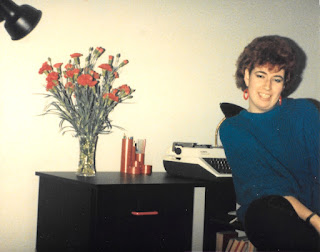


I grew up in a rambling Victorian house that, even shared with my large family, had a room no one else wanted to use. When my parents moved in they decided it would make a great playroom, to keep the kids out of the way of the grown-ups. But my brothers and I convinced ourselves the room was haunted by the little old lady who'd lived in the house ten years before us. We knew she'd used the room as a bedroom, as she'd been too frail to climb the stairs. So we decided her ghost was the reason the door would open by itself (this often happens in old houses) and we even thought we heard a piano playing in the empty room - it was probably a radio! We ignored the cold spooky 'playroom' and played in the garden instead!

Skip forward fifteen years when we'd all grown up, my mother suggested I could have the room for myself. It would be a fabulous place for me and my friends to hang out away from the adults (I'm noticing a theme here), but I was thrilled. Especially when,

Mum: You can decorate it however you like!
Me: I'm going to paint the walls black!
Mum: Absolutely not!

We compromised with grey walls but with my first pay cheque I bought a desk, two bookcases, and a small sofa, all in my favourite black. I probably imagined lying on the sofa and dictating my novel to a secretary, like Barbara Cartland, because that's what writers do, right?

Thirty-five years later (thirty-five!!!), I still have the two black bookcases but sadly the desk was taken to the dump just before Christmas. Although it did have a second life as my daughter's desk for a good twenty years. 

I'd completely forgotten this photo had been taken until I found it last week. As my husband said when I showed it to him (after he'd got over laughing at the 80s fashion), what advice would I give my past self?

Apart from 'Don't wear big earrings around small children'? Probably, 'Hang on in there' because it would take another ten years before I was offered a book contract.

And maybe suggest I get over my obsession with the colour black... 


Related Posts:

Friday, 20 March 2020

How I Found the 'Write' Inspiration

Have you ever read a book that you loved so much, that as soon as you finished it you had to go right back to the start and read it all over again? Have you ever read a book so many times that it eventually fell to bits? And when you went to buy a replacement, although the book had been reprinted several times, you had to have the version with the exact same cover as the one that had disintegrated? Reading a book just like that led to me becoming a writer.

I was 13 years old and on a family holiday to the Isle of Wight. It was the height of summer, so it rained and it rained and it rained. While my brothers disappeared off to the amusement arcade, I found myself in a little café/bookshop on my own, sat next to a carousel stacked with books by an author I’d never heard of: Jilly Cooper.

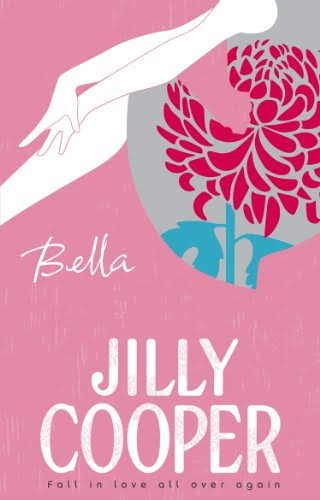
I know what you’re thinking: Jilly Cooper writes huge, glitzy, blockbusting novels about horses. But before Riders and Rivals, Jilly wrote a series of romantic comedies with girl’s names as the titles: Emily, Bella, Harriet, Prudence, Octavia and Imogen.

I handed over my pocket money in exchange for Emily and was soon transported to Scotland along with the heroine, who finds herself married to a brooding artist, spends the night in a haunted castle and is caught stealing roses in a see-through nightdress. I quickly handed over the remainder of my pocket money for the other five books and my parents didn’t see me for the rest of the holiday.

I think the reason I loved Jilly’s books so much was that they were hugely funny and didn’t take themselves too seriously. The heroines made the same mistakes as the rest of us, but rather than whinge about it they just cracked a joke and moved on. My favourite (the one that fell to bits) was Imogen. The heroine falls in love with a bad boy tennis player and is whisked off on holiday to the French Riviera, which at the time seemed a very long way from a rain-lashed Isle of Wight.

Three years later, for my English Literature exam, I had to give a presentation on my favourite books. My friends (being complete suck-ups) picked authors like Dickens and Orwell. I chose Bella, Octavia and Imogen. Unfortunately, my passion and enthusiasm for all things Cooper failed to impress the examining board and I passed with only a B+.

I didn’t mind. If you’re the kind of person who loves reading, sooner or later you’ll want to create stories of your own.

And that is exactly what I did.


This post was previously published on the Chick Lit Club blog

Links:

If you'd like to find out more about Jilly Cooper, click here for her website.

Related Posts:

Sunday, 1 January 2017

Happy New Year!

How do you feel about New Year's resolutions? Do you ever make any? Do you stick to them?

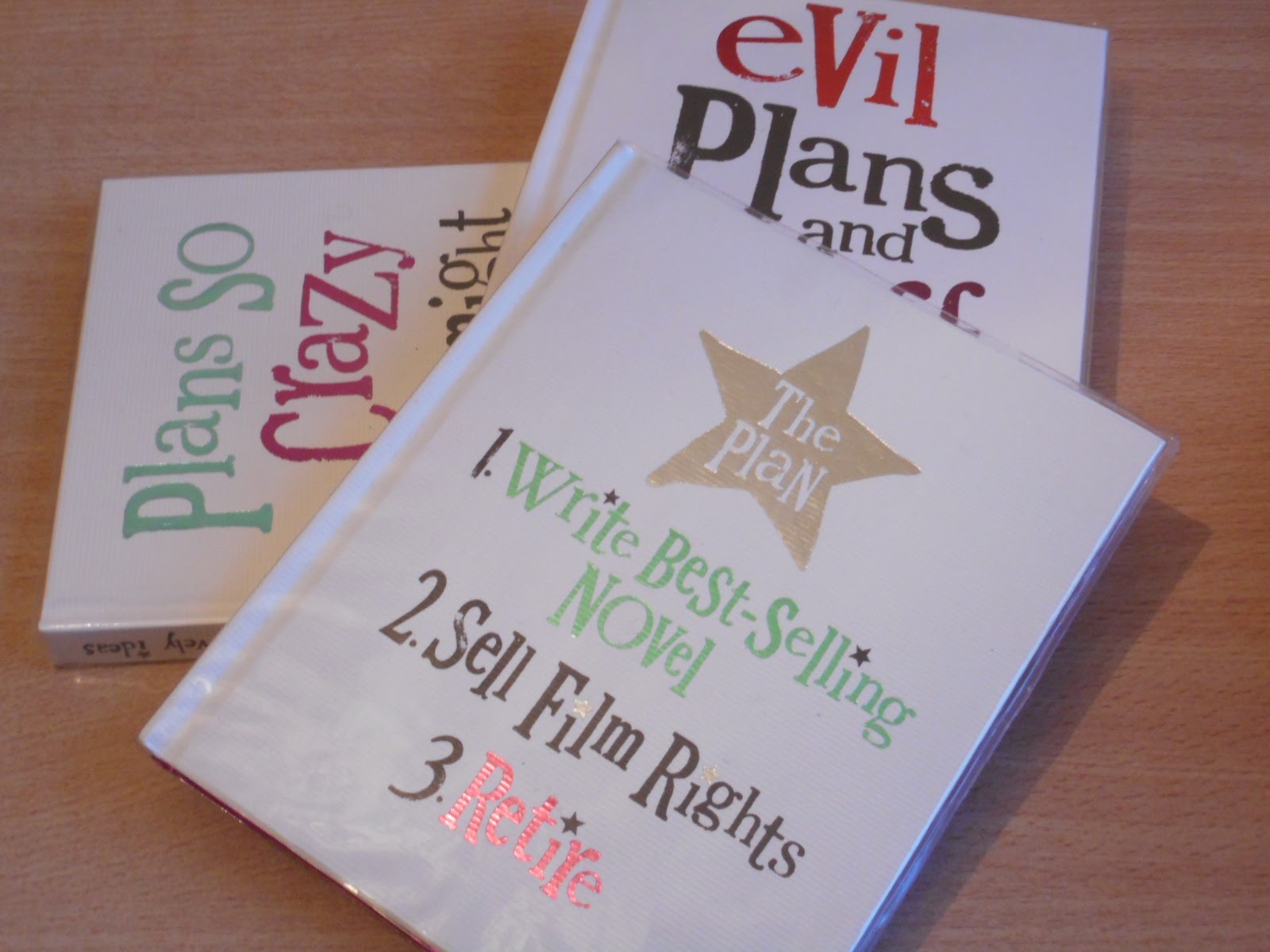
When I was a teenager, I would make three resolutions every year without fail. And every year they would be pretty much the same: (1) Lose weight, (2) Save money, (3) Write a book. Every year I failed to keep them but at least it saved having to think up three more. And if that sounds familiar, I gave the same trait to Marina in Smoke Gets in Your Eyes - my first novel, published fifteen years ago this month.

I think it's about time my resolutions had an update! So, what is it that I'd really like to change if I could?


Well, I'd like to

Be more organised ...

As you may have noticed, I'm not the world's most organised person - and then last year my phone died, taking all my contacts and my calendar with it! Disaster! But I've learnt from this! I have a new phone - and I've now got back ups! All my contacts have been updated in a proper address book, everyone's birthday is listed in a birthday book and I have a back-up diary. So, fingers crossed!

Write more ... 

I'm a professional writer, that's what I do all day, right? Yes - along with critiques, reviews, blog posts, guest blog posts and social media for both myself and other authors, somehow the actual book writing is getting very squeezed. JK Rowling talks about how important it is to 'guard' precious writing time, and she is right. What can I do to fix it?

My friend, Trisha Ashley, belongs to a writers' group called The 500 Club with Elizabeth Gill and Leah Fleming. Every day they agree to email each other once they've written 500 words. Isn't that a great idea? It's certainly easier to achieve than 1000 words, and the words soon mount up. I'm going to give it a go - and record my progress in my back-up diary!

Try to leave the house occasionally ...

It is easy when you're self-employed to forget to have any 'me' time. A couple of years back I was working from 7.00 am to 9.00 pm, seven days a week, and all I achieved was to make myself ill. Besides, if I don't meet new people, visit new places and have new experiences, how will I find anything new to write about?

Yes, that's me,
halfway up the Eiffel Tower with my daughter


So there you have it. Those are my resolutions for this year, how about you?

Tuesday, 11 October 2016

Once More Unto The Bookstore (or, how I accidentally ended up with a book blog)

I've always loved books. I started with my mother's Enid Blyton collection and some great big books of fairy tales from the 1920s/30s, which I originally believed had belonged to my father but now I think they were probably my grandmother's. (You can read more about the books which influenced me as a writer here.)

I devoured every book I could find, some quite unsuitable for my age; I read Shirley Conran and Jackie Collins while I was still at school. On one occasion I remember borrowing a book from the school library and taking it back the next day, and the teacher refusing to believe I could have possibly read it so quickly. I felt quite offended!

Of course the thing about reading a good book is that I immediately want to tell everyone about it - how great it was and why they really should read it themselves right now. Although the drawback to that is I'd end up having to loan out my own precious copy and, as you know, I've never been great at sharing. The other drawback is that most of the people I know in real life don't read the kind of books I like. So here I am, reading all these great books and having no one to tell ...

During the summer one of my Twitter friends, Terry Tyler, told me about her idea to encourage people who would not normally write a book review to post one on Amazon. You didn't need your own book blog, or be any kind of professional or regular reviewer, to take part. To help spread the word, the reviews were hashtagged on Twitter as #August Reviews and promoted by other book bloggers, including Rosie Amber. And I gave Terry a whole load of reasons why I couldn't take part:

(1) I'm a writer.
(2) I know too many other writers. 
(3) I could never give another writer a one star review (which I might be likely to do, as I'm far too honest for my own good).
(4) I've never been able to get on with Goodreads.
(5) I love reading books and having to write a review afterwards would be too much like doing homework.

Ironically, last month I needed to teach myself Wordpress for another project. I had to set up a new blog and blog about something. What could I blog about? Books, obviously!

September turned into October and I went through my Kindle to dig out all the spooky books I could find, intending to read them in the weeks leading up to Halloween. Mainly because I have a really bad habit of downloading cheap and free books, and then not reading them. (Any author reading this, and thinking of running a free promotion, bear that in mind - people are more like to read your book if they've paid for it!) 

As I read each book I wrote a review - and I was surprised at how much I enjoyed it. When the Wordpress project came to an end I was loathe to let my new blog go. So I moved it over to Blogger and carried on for a bit, just to see if I could.

If you want to check out the new blog, it's called Once More Unto The Bookstore. I'm only reviewing books I've enjoyed and that I've bought myself, because I'm a writer not a book blogger. If you're interested to know what I'm reading, I'd love to see you over there. And if not, this blog will still carry on as usual with me talking about myself.

Some things never change.


Related Posts:


Never miss a post! See that little box in the left-hand column, near the top, that says 'Follow by Email'? If you add your email address, you'll receive my latest blog post almost as soon as I've written it.


Images Copyright: Shutterstock (girl reading) and Fotolia (book)

Friday, 2 September 2016

How to Write a Guest Blog Post

If you’re a writer, sooner or later someone will ask you to contribute a guest post to their blog. If you’re a savvy writer with a book to promote, you will have identified bloggers likely to be interested in a guest post months ago, and pitched them accordingly. If you’re traditionally published, the publisher's marketing department will have hopefully arranged this for you, so all you have to do is write the thing. Simple, eh?


No? Oh all right then, here are ten tips to get you started:

Read the Blog!

Obvious, yes? Why? Because it helps you judge the style and tone of the post you're about to write. It’s no good pitching a piece about your dark erotica novel to a book blogger who only posts about sunny romantic comedies. Nor will readers of a book blog be much interested in a post about the mechanics of writing, unless they are writers themselves – it’s a bit like a magician explaining how their tricks are done. Keep the ‘how-to-write’ posts for the writers’ blogs.

Check the Requirements

Are you expected to write about a certain subject or theme? How many words do they want? As a guide, 600 to 1,000 words is the average length of a blog post. If you write something longer, remember to break it up with sub-titles or bullet points. (See: Ten and a Half Things We’ve Learned About Blogging). And, most importantly, when is the post needed by?

Stick to the Deadline

But if you have a really, really good reason for failing to keep to the deadline, ensure you give the blogger as much advance notice as possible, so they can fill the slot with something else. If you get to choose your own deadline, pick a date around the publication of your book.

Showcase Your Voice

The structure of a blog post is somewhere between an article and a letter to a friend. Whatever you’re writing about, it should sound like you speaking, not Wikipedia. You want people to read the post and think, ‘I enjoyed that. I wonder what their book is like?’

So Don’t Forget to Mention Your Book!

You are there to promote yourself as a nice, friendly author who’s written a great book, remember?

But Don’t Make It All About You

Think about what the reader can ‘take away’ from your post. Keywords here: informative, entertaining, amusing. It’s a waste of time writing a post that’s only about a book no one has had the chance to read. If your book is set in a real location, write about the location. If your character is a police detective, and you were once a police detective, write about that. The post should work out at 75% about the subject that inspired your book, to 25% actual detail about the book. Don’t waffle on about nothing. OK, it’s ‘only’ a blog post – but it should have a point! (And preferably a beginning, middle and conclusion too).

Plan Ahead

Try jotting down a list of subjects you can potentially blog about while you’re actually writing your book. For my most recent novel, Trust Me I Lie, I blogged about the true confessions of an author on social mediathe enduring appeal of fairy tales, and why I love 'unlikeable' heroines – all of which are connected to the themes in my book.

Make the Blogger’s Life Easier

When you submit your post, remember to attach an up-to-date photo of yourself and a clear image of your book. Also include, either as part of the post or in a separate file, a short by-line, a longer biography (let the blogger choose which they will use), and links to your website/blog/social media accounts, including where your books can be bought. If you don’t do this, the blogger will either leave the information out or copy a bio from Amazon/a social media site that might be out-of-date. But make sure the file sizes are not so big they’ll fill the blogger’s inbox. That is not the way to make friends!

Don’t Be a ‘Difficult Author’

It’s your responsibility to ensure your post has been proofread, any stated facts are correct and it is in every way perfect. Also accept that the blogger is completely within their rights to edit the post for length, take out anything they consider might get them sued, or even reject it completely.

Promote the Post!

Don’t leave the entire promotion of the blog post to the blogger! They’ve been kind enough to host you on their blog and given their time free of charge. The least you can do is share the post across social media and visit the blog to check for, and answer, any comments.

If your post is popular, you’ll be invited back. Who knows, you might even discover you enjoy writing blog posts so much you’ll start a blog of your own …


This post previously appeared on Novelistas Ink.

Monday, 8 August 2016

8 Tips for Writing in Cafés

It's the summer holidays, and while my children are no longer at that age where they expect to be entertained every minute of the day, there is that expectation that mum will be the one driving them to where they expect to be entertained every minute of the day. Which is how I found myself working from a café for two mornings last week, instead of my nice snug study.


It certainly brought back memories. When the children were younger I would regularly take them to one of those indoor play centres. They would go crazy sliding through twisty plastic tunnels and getting lost in ball pits, and I'd drink lots of coffee and write. Much of Breathless was written this way - but it did help that I'm the kind of person who can screen out background noise as I work!

But even I was surprised at how much I managed to achieve last week. I'm not sure if it was the coffee, a different environment or just being away from the Internet - probably the latter! So if you feel the need to get away for a few hours, just to write, here are my tips:

(1) Choose a café where you are already known, or one that's part of a large chain where you'll blend in with everyone else.

(2) Go during a quiet time so you're not seat hogging, and sit in a quiet area so you're less likely to be disturbed or asked if you're writing a book - although this is a good opportunity to hone your elevator pitch!

(3) Order plenty of drinks to keep the staff happy enough that they won't turf you out, but don't go mad because it'll get expensive. Preferably, use a café that has a loyalty card scheme - after a few visits you'll get a free drink!


(4) Sit facing the room unless you want people reading your draft sex scenes over your shoulder. There's no greater temptation than an open laptop. 

(5) If you're the kind of person who can't write in a noisy environment, try revising or proof-reading instead. In the old days I used to cart around a huge A4 lever arch file with my manuscript in it, now I copy my work onto a Kindle. Alternatively, just print out a few chapters.


(6) Consider using a (shock horror) notebook and pen. A notebook doesn't need charging, you don't have to worry about it being damaged and it's far more portable. But take more than one pen, in case it runs out, and ensure that it's comfortable to write with.

(7) Don't expect to write perfect prose. In fact, don't expect to write anything at all. Start off writing notes, like a long synopsis. With any luck you'll find the notes will get longer and turn into snatches of dialogue or description and then whole scenes. Before you know it, you'll have drafted an entire chapter.

(8) But if you find writing fiction in a café doesn't work for you, try something else - outline a new story, or write a blog post or article instead.

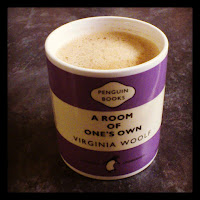
And if all else fails, get out your camera. You never know when all those Instagrammed coffee shots are going to come in handy ...


Related Posts:
A Room of One's Own
Getting Noted
My Writing Process
Seeking Inspiration
Where I Write (written for Novelistas Ink)


Never miss a post! See that little box in the left-hand column, near the top, that says 'Follow by Email'? If you add your email address, you'll receive my latest blog post almost as soon as I've written it.

Sunday, 17 April 2016

Writing: Getting to Grips with Wattpad

 What is Wattpad?


Wattpad is a free social media app for writers and readers. Writers of all abilities, from newbies to professional authors, can post stories one chapter at a time. Founded in 2006, Wattpad has more than 40 million users worldwide - and the majority are readers.


Most stories are read on a mobile phone; 50% of stories are written on a mobile phone. The most popular genres are YA, New Adult, sci-fi and romance. Wattpad is popular with teenagers, but 35% of users are aged between 18 and 30. Most users live in the USA, Canada and the UK, and it's the number one app in the Philippines.

It's not just for fan fiction either. Many established authors use Wattpad, including Margaret Atwood, Colleen Hoover and Meg Cabot.


But Is Wattpad For You?

If you are new to writing, I would suggest joining with a couple of friends. Wattpad is a great way to share and comment on each other's stories. You can add photos, videos and create a cast list of actors who you would love to play the part of your characters. My seventeen-year-old self would have loved Wattpad!

If you are a published author it can be an excellent way to connect with new readers - but it won't necessarily lead to book sales. As Wattpad is free to use, you are effectively giving away your work for free too. Consider posting the first book in a series, or a novella, or short samples of novels - the first two or three chapters. Check this is OK with your publisher first though. If you are with KDP Select, for example, you are limited to not publishing more than 10% of your book on any other website, including your own.

When I first joined Wattpad, I posted two 10,000 word short stories, originally published in an anthology, to which I still owned the rights. One of these was chosen by Wattpad to be one of their Featured Reads. You don't have to wait for your story to be chosen for this promotion, you can apply here. The only rule is that you have to agree for that story to stay on Wattpad for 6 months. The advantage of having your story featured is that you'll gain more readers and followers. 


If you are unpublished and serious about your writing, do be careful exactly what you post. Some competitions and publishers have a rule that they won't accept a story if it has already been published elsewhere - and that will include Wattpad. 

Tips

As with any social media account, put a bit of effort into setting up your profile. Use a unique picture for your avatar, either a photo of yourself or a picture that in some way represents you. And don't forget the banner (background strip at the top of the profile). Most users have a pen name but if you are already published, or have other social media accounts, or a blog/website, it makes sense to use the same name so you can be easily found by your readers. You can add links to these accounts from your Wattpad profile, and when you post a story you can also add a link to a retailer such as Amazon or Kobo. 


Make it clear if your story is only an extract. You don't want readers waiting for the end of a story which will never come.

Each chapter of a story counts as a separate read/vote, so it makes sense to post each chapter as a separate instalment. For example, Why Do Fools Fall in Love* has fifty-two chapters, so one person reading the whole story would be the equivalent to fifty-two reads.

It is up to you how long your chapters are. I try to aim for at least 1,000 words per instalment, preferably 1,500 words. It certainly makes you think about where to put your cliff-hangers!

Votes are worth more than reads, so gently encourage readers to vote for your story if they have enjoyed it. At the end of each of my chapters I have a 'call to action': 


Thank you for reading my story! 
If you have enjoyed it, please help others find it by voting!

I also add the date the next chapter will be posted.


If you are serialising a novel, try to post a new instalment once a week. If you want your story to rise up through the charts, you will need to post at least twice a week. 


Wattpad readers are non-critical when it comes to spelling mistakes and typos - to them, the characters and the story are more important - but don't use this as an excuse not to post your very best work! If you are posting a work-in-progress, you can go back and edit it at any time.


After you've published a new chapter, double-check for errors. I copy and paste my chapters, which look absolutely fine until I hit 'publish' - and then everything  mysteriously shifts to the left. Occasionally words merge and weird symbols appear. So I always make sure I check through what I've posted after publishing as well as before.


Remember to share your stories to your other social media accounts. Widgets are available to add to websites and blogs. You can also create quote art - a line or two from your story set against a pretty background.


Like Facebook and Twitter, you can post a message to your followers via the Conversations tab. Readers can write on your 'wall' and you can send direct messages to individual users. And every time you update a story, your followers will receive a notification.


Why I love Wattpad

One thing I found extremely disconcerting at first, was the way a reader can comment at any point during the text! But once I got over myself, I realised what a great idea it was. The comments are almost always positive and as a writer it is lovely to see how readers are engaging with your story and characters.

As stories are told in instalments, forcing readers to wait for the next part, it really made me think about where the best place was to end the chapter - and how much of a page-turner that chapter really was. It also made me think about the reader and what their reaction was likely to be to an upcoming scene.


Conclusion

If you are a published author, with little or no free time, looking for a social media site to do the whole 'buy my book' thing, Wattpad probably isn't for you.

If you are a published author wanting to expand on your readership, and you're happy to chat to fans about your characters and plot twists, you could post up a novella or the first book in a series. 

If you are new to writing and want to connect with fellow authors, and you have a thick enough skin to cope with readers putting comments all over your work, then why not give Wattpad a try? You could set up a profile and read other people's stories to get a feel for the site first, until you feel brave enough to dive in and post one of your own.

Like all social media, you'll get the most out of Wattpad the more you use it, and by being friendly, genuine and social. You need to take the time to do it properly - set up a profile, post stories or extracts, and interact with readers and other writers. Read, comment and vote for other people's stories; become involved.

And above all, don't forget to have fun!


*This story is no longer available to view on Wattpad


This post was previously published on Novelistas Ink

Tuesday, 8 March 2016

Writing: Getting Serious


I've always liked the idea of New Year's Resolutions. That chance to reinvent yourself every year, like the kind of books I read as a teenager: neglected female completely transforms into the belle of the ball with the help of a few mice, a pumpkin and - oh yes, a fairy godmother. Funny how these kind of stories always involve someone else coming to the rescue. I'm a proactive kind of person myself. If I'd been Cinderella, it would have been more a case of "B***** the Fairy Godmother, get me a pumpkin and I'll do it myself."

You see, as much as I love watching TV shows like The X Factor, there's always one thing guaranteed to infuriate me: whenever a contestant says something like, "I really want this, I've wanted it my whole life." OK, so they've really 'wanted' a singing career but they've never done anything about it? Never had singing lessons, or written a song, or formed a band, or tried to set up a few gigs? Basically, they've been sitting around waiting for a fairy godmother (Simon Cowell?) to come to the rescue.
Can you see where I'm going with this?

If your New Year's Resolution was to write a book, or maybe you've already written a book and you want to get it published, what have you done about it? Anything? Anything at all? Scribbled a few notes? Fantasised about the hot actor you'd like to play your hero in the movie adaptation? Stuck a pin in the Writers' and Artists' Yearbook and queried a few random agents? Enjoyed a few daydreams about the glamorous life you're going to lead as a full-time author? (And that's a whole other blog post, trust me.) If you want to be a writer badly enough, I'm afraid you're going to have to get serious about it.


Understand that you'll to have to make sacrifices. Not the dancing-naked-in-the-moonlight-and-endangering-defenceless-chickens sacrifice, but the kind that involves the most precious thing of all: your time. For example, if you know you only have an hour a day to write, then write - don't waste that time faffing about on social media.


Perfect your craft
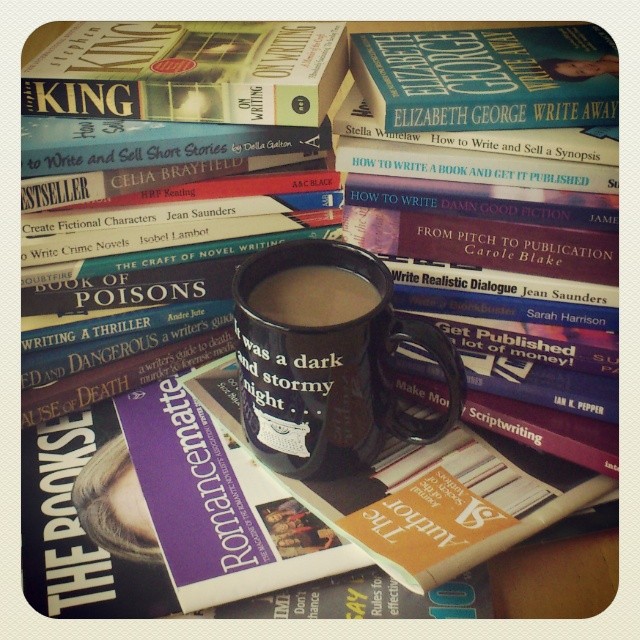
. There are hundreds of books about writing (my favourite is Stephen King's On Writing). Or take a creative writing course and, once you've written your novel, pay to have it professionally critiqued before sending it out to an agent/publisher. Although I still feel the best, easiest and most fun way to learn how to write fiction is to read lots of it. It's not expensive. You can borrow books for free from your local library and there are always deals to be had on ebooks. If you feel you don't have the time to read, think about how you spend the time you do have. Sacrifices, remember? No one lies on their death bed wishing they'd spent more time on social media.


Having said that, social media is an effective tool for writers, but only when used in the right way. Unless you are already published, forget about all the things you've heard about creating a 'brand' and setting up a 'platform'. The most important thing is to be social; you'll get far more out of it. Make friends with fellow writers, new and established. Follow people in the industry, such as agents and publishers - but don't expect them to follow you back, and definitely don't pitch your novel unless invited to do so. Most publishers are great at posting about deals on books and will have competitions to win signed copies from your favourite authors. Some publishers have blogs where they post writing tips from their editors, tell you when they are open for submissions and what they are looking for, as well as running writing competitions to win a book contract.


Talking of which, don't overlook those writing competitions - that's how I got my first book deal - and I didn't even win. And, if
 you can afford it, attend writers' conferences and literary festivals. Editors and agents are less likely to ignore a submission if it's come from someone they remember (in a good way!) from a workshop or a one-to-one meeting at a writers' conference. But if you're not lucky enough to bag a one-to-one, don't despair. Sometimes you can learn more from attending an industry panel event, and listening to writers and editors talking about the current market - what's popular and what's out of fashion. You'll have the opportunity to ask relevant questions and learn more than if you had pinned all your hopes on a one-to-one where you might have either targeted the wrong agent/editor, belatedly realised your submission is not polished enough, or had plain nerves just get the better of you. Early on in my career I found myself sitting on a sunny bench at a writers' conference, drinking coffee and chatting about trends in fiction with a commissioning editor. I got far more out of that than if I'd tried to pitch her my book.

No one understands a writer like another writer. Try joining a writers' group, club or societyThe Romantic Novelists' Association accepts unpublished authors under its New Writers' Scheme. Alternatively, find out if there are any writers' groups meeting in your area and, if not, why not start one? The Novelistas came about because Trisha Ashley moved to North Wales and put out a request asking if other local writers would like to meet up. Our group has now been going for almost fifteen years.

L-R: Trisha Ashley, Juliet Greenwood, Louise Marley


Compared to when I first started out, there are now so many great opportunities for writers. Don't waste time waiting for that fairy godmother or daydreaming about success. If you want to be taken seriously as a writer, you have to start taking your writing seriously.


And no one can do that but you.


This post was previously published on Novelistas Ink

Photo Copyright: All pictures my own except Cinderella (Fotolia) and girl with laptop (Shutterstock).

Monday, 11 January 2016

Characters: What's in a Name?

In which I talk about how I find names for my characters.    


This blog post was prompted by three conversations I've had with my readers over this past month, about how I name my characters. Two pointed out I'd chosen the same name as one of their relatives (sorry, it's purely coincidental!) another queried why I'd named a character after a dog(!)

Like most authors, I have a book of baby names (although the only time I've ever used it was when I was trying to choose a name for my own children) but I try not to pick a name at random, even for the minor characters. The name has to mean something. I have more trouble with surnames - they are sometimes chosen at random. Luke McFadden, the hero from Why Do Fools Fall in Love, owes his surname to one of my husband's books on computer programming. I'm not the only author to do this. Ian Fleming took the name of James Bond from a book on birdwatching!

More recently I've been delving into my family tree and borrowing their surnames. Lydia Cavill, the police inspector in Nemesis, who also features in Trust Me I Lie, was the name of one of my several times great-grandmothers. Vines (spelt Vynes in Nemesis) and Groves (Nemesis) are also family surnames. Halfpenny (Breathless) was the surname of a lady I got chatting to in a Jacuzzi!

First names require a little more work. They have to suit the character who has taken up residence inside my head and, for me at least, they have to have some kind of meaning. Sometimes I do cheat - Shelby (Why Do Fools Fall in Love) was just a name I loved - at the time I didn't realise it was also the name of a car designer (and therefore a car!) As Shelby is not the kind of name that occurs very often in the UK, I felt I did have to give a reason for calling her that. So I decided her mother had been a huge fan of Hollywood movies, and gave Shelby three brothers: Harrison, Cary and Irving. As in Harrison Ford, Cary Grant and Irving Berlin (the man who wrote White Christmas).

To Joseph Halfpenny (Breathless) family comes before everything, so I had him name his daughters after his aunts: Phyllis, Selma and Connie - giving them overly 'old-fashioned' names to emphasise the point. (Sorry, if your name is Phyllis, Selma or Connie!) In Nemesis I had a character who was so eccentric she called her three children Summer, Autumn and Wynter, but in the final rewrite she was edited out - leaving me with three siblings called Summer, Autumn and Wynter, and readers perhaps wondering if I was the one who was eccentric.

And the character I named after a dog? Well, that would have been the bodyguard, Bruno, from Why Do Fools Fall in Love. And the idea behind that was that I kind of imagined him to be a human version of a bulldog.

Of course sometimes this method does land me in trouble. In my novella The Indecent Proposal I needed a name for a famous singer, but every time I created one I liked, I found (via Google) there was already a singer with the same name! My creations became sillier and sillier, and still there were singers out there with exactly the same name! Eventually the poor girl ended up being called Destiny Swan. Why is this a problem? Well, for my next book I've decided to use her as one of the main characters. There is no way I'm spending a whole book calling the girl 'Destiny'. She's going to have to be nicknamed 'Desi' - and lump it!

So, how do you choose your characters' names?


Related Posts:


Never miss a post! See that little box in the left-hand column, near the top, that says 'Follow by Email'? If you add your email address, you'll receive my latest blog post almost as soon as I've written it.


Photo copyright: Fotolia